

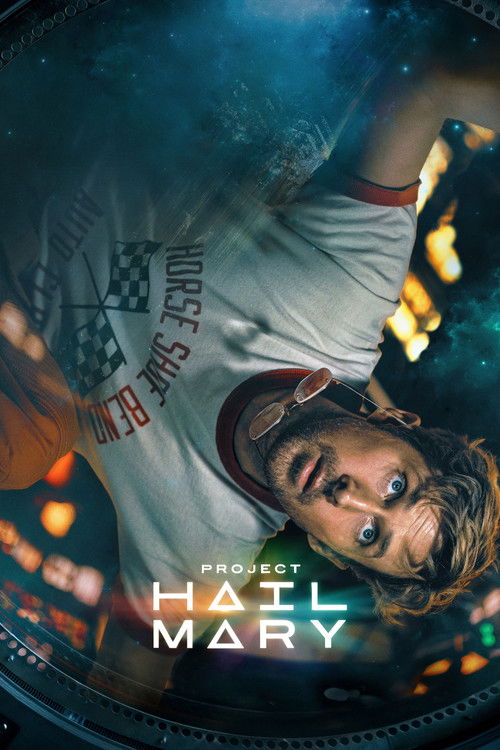
`html
Project Hail Mary Review: Ryan Gosling Saves the Sun
Is Project Hail Mary the best sci-fi of 2026? Read our full review of Ryland Grace's cosmic journey. See why this science teacher is a hero. Click now!
Imagine waking up in a sterile, white room with no memory of your name, your job, or why there are two corpses in the bunks next to you. Now, imagine realizing you’re on a spaceship, and you’re the only hope for a dying Earth. This is the pulse-pounding opening of Project Hail Mary, the long-awaited adaptation of Andy Weir’s bestselling novel. Directed by the visionary duo Phil Lord and Christopher Miller, this film isn’t just a space odyssey; it’s a masterclass in optimistic storytelling. It reminds us that even when the universe is ending, human ingenuity (and a little bit of help from a friend) can light the way.
Have you watched Project Hail Mary? Share your thoughts in the comments below!
The Plot: A Race Against Cosmic Extinction
The story follows Ryland Grace, a disgraced molecular biologist turned middle-school science teacher, who finds himself as the reluctant protagonist of a literal project to save the human race. The sun is being consumed by "Astrophage," a space-borne organism that is dimming our star's output and threatening a global ice age. Through a series of non-linear flashbacks, we see how Grace was recruited—or rather, drafted—by the formidable Eva Stratt (Sandra Hüller) to find a solution to this extinction-level event.
In the present day, Ryland is light-years away in the Tau Ceti system. As his memory slowly returns, he realizes the weight of his mission: he is on a suicide run. The science is complex, but the film distills it beautifully, making the audience feel as smart as the protagonist as he conducts experiments in zero-G. However, the true heart of the movie begins when Ryland Grace encounters an alien vessel. What follows is one of the most unique and touching "first contact" stories in cinematic history. He meets Rocky, an inhabitant of the planet Erid, who is also there to save his own world. Together, the science teacher and the spider-like engineer must bridge the gap between their two species to solve the riddle of the Astrophage.
Acting and Direction: Lord, Miller, and the Gosling Charm
Phil Lord and Christopher Miller, known for The LEGO Movie and Spider-Man: Into the Spider-Verse, were the perfect choice for this project. They bring a frantic, kinetic energy to the film that mirrors the high-stakes problem-solving of the book. Their ability to balance humor with existential dread ensures the movie never feels too heavy, despite the literal end of the world looming in every frame.
Ryan Gosling delivers one of the most nuanced performances of his career as Ryland Grace. Gosling has mastered the art of the "competent but terrified" hero. He captures Grace's transformation from a man who just wants to stay safe in his classroom to a hero who embraces his destiny. His chemistry with Rocky—a character brought to life through a mix of James Ortiz’s physical puppetry and breathtaking CGI—is the film's backbone. Even though Rocky communicates through musical notes, the bond between the science teacher and the Eridian feels more real than most human-to-human relationships on screen.
Sandra Hüller is equally impressive as Eva Stratt. She portrays the "world’s boss" with a chilling pragmatism that makes you question the ethics of survival. Every time she appears in a flashback, the tension spikes, providing a grounded, political contrast to Ryland's lonely journey in the stars.
Cinematography and Music: A Visual and Auditory Feast
Visually, Project Hail Mary is a triumph. The cinematography by Greig Fraser (Dune) creates a stark contrast between the claustrophobic, high-tech interiors of the Hail Mary and the terrifying vastness of the Tau Ceti system. The use of light is particularly clever; as the sun dims, the color palette shifts toward a cold, oppressive blue, making the warmth of the ship’s laboratory feel like a sanctuary.
The music, composed by the legendary Hans Zimmer, is perhaps the most critical element of the film. Since Rocky’s language is based on musical chords, the score isn't just background noise—it’s a character. Zimmer integrates these melodic "speech" patterns into the soundtrack, creating a symphonic bridge between the two leads. It’s an auditory experience that demands to be heard in a theater with a top-tier sound system. You can check out our list of Best Movies 2026 to see where this ranks against other visual spectacles.
The Highs and Lows: Science vs. Spectacle
The Positives:
- The "Science" in Science Fiction: Like The Martian, the film celebrates the scientific method.
Keywords: project, science, teacher, ryland, grace
Have you watched this movie? Share your thoughts in the comments!
